
Compression boots for edema: Safe settings guide
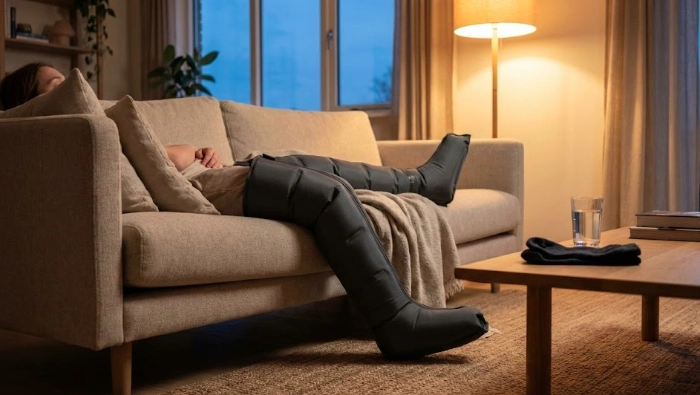
-
Are compression boots good for edema?
-
When should you not use compression boots?
-
What compression is best for edema?
-
How long to wear lymphedema boots?
-
How many times a week should you do compression boots?
-
Who makes the best compression boots?
- A quick “fast relief” stack that usually helps
-
Conclusion on Compression Boots for Edema
-
Frequently Asked Questions
- Are compression boots good for edema?
- When should you not use compression boots?
- What compression is best for edema?
- How long to wear lymphedema boots?
- How many times a week should you do compression boots?
- Can compression boots make swelling worse?
- What should you do if one leg is suddenly more swollen than the other?
- Keep exploring
- Infrared sauna dangers
- Do massage guns help with soreness
- Does PEMF therapy really work
If you are searching compression boots for edema, chances are high you are not casually curious. You are likely tired of the end of day ankle ballooning up situation, the heavy legs that feel like they are holding extra water, and the quiet stress of wondering if this is normal or a warning sign.
Before we get into settings and brands, there is one important thing: swelling can be harmless. ..Or it can also be a clue that something bigger is going on. This article is not medical advice, so think of this as a practical guide to help you ask better questions, use these tools more safely, and know when it is time to get checked.
If you want the broader version of this topic that stays a bit more focused on the symptom itself, compression boots for swelling fits right alongside this article.
Are compression boots good for edema?
They can be genuinely helpful, especially for the kind of swelling that builds when your day has been mostly sitting, standing, commuting,.. or traveling. The reason is simple: compression boots use intermittent pneumatic compression, which is basically air chambers that inflate and deflate in a sequence. That sequence encourages fluid to move up and out of your lower legs instead of settling and hanging out near your ankles.
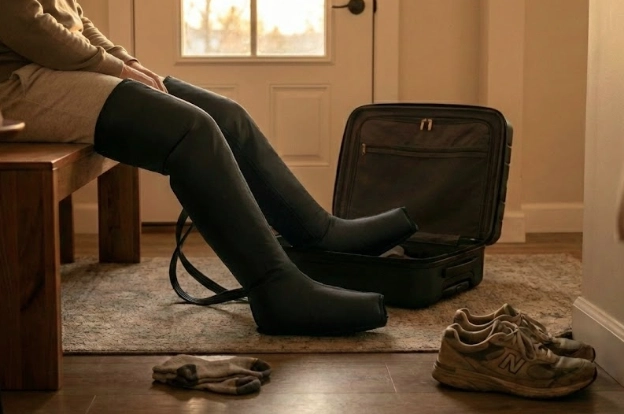
Long travel days do not have to end with swollen ankles.
The best way I can describe the “good” feeling is this: your legs stop feeling stretched and tight. People often notice that their calves feel lighter, their ankles look less puffy. Eventually walking feels less stiff and sometimes all of this occurs within a single session. It is not magic. It is fluid movement.
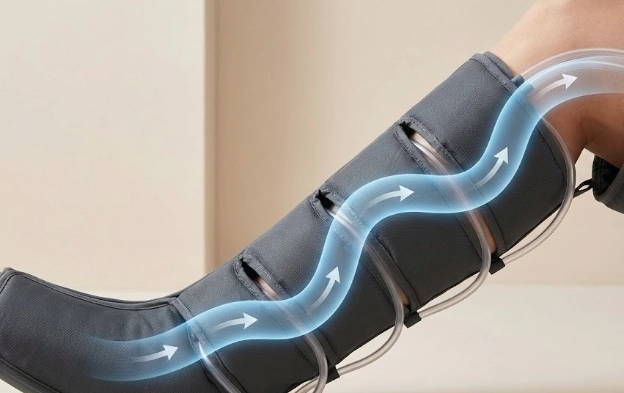
It is not a clamp. It is a wave that nudges fluid upward.
That said, compression boots are not a root cause fix. If your swelling is from medication, a something more serious that involves organs and more complex problems like lymphatic dysfunction, compression boots may reduce symptoms but they will not solve the reason the fluid is collecting in the first place.
A quick note on research. A 2023 clinical study: Intermittent pneumatic compression combined with standard treatment after total hip arthroplasty and its effects on edema of the operated limb found that adding intermittent pneumatic compression after hip replacement reduced limb swelling more than standard care alone. That is a very specific setting, but it supports the basic idea that this type of compression can measurably reduce swelling in the leg.
And because edema and lymph issues often overlap in real life, a 2025 review: Intermittent pneumatic compression devices for the prevention and treatment of lymphedema looked across multiple trials and found IPC (compression) can reduce limb volume and improve symptoms. This also serves as a clear reminder that best protocols still vary by person and stage.
If you want the “why this works” version in everyday language, compression boots for circulation connects well here because better flow is usually the mechanism behind the relief you feel.
When should you not use compression boots?
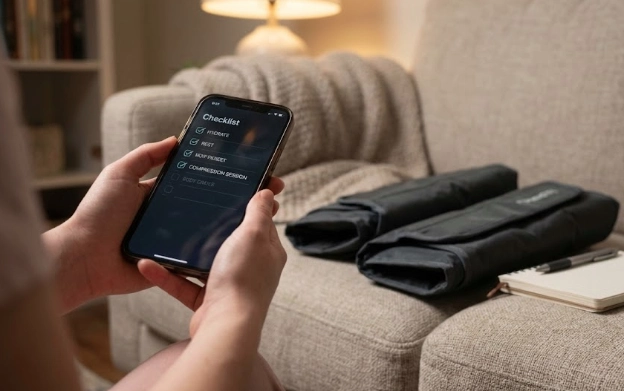
Not fear. Just a quick filter before you press start.
This part can sound dramatic on paper, but it is really just a common sense filter. Compression boots are a squeeze tool. If your swelling is from the usual “long day, lots of sitting.. not enough movement, then they often feel amazing. If your swelling is new, unexplained, or even suddenly different for you.. the smartest move is to get clarity from a medical professional first instead of trying to squeeze the problem.
A good rule is this: if you do not know why your legs are swollen, do not start with aggressive pressure at home. Get checked. Seriously. Then use compression as part of a plan.
There are also a few situations where you should skip compression boots unless a clinician has specifically told you it is appropriate. If you have reason to suspect a blood clot in your legs, compression is not something to experiment with. If you have severe circulation problems where blood already struggles to reach your feet, squeezing can make things worse. And if you have active skin infection, open wounds, or very fragile skin in the area, compression can irritate tissue that needs to heal first.
During a session, your body gives you useful feedback. If you notice numbness, sharp pain, intense tingling, or your foot looks pale or dusky, stop the session. Do not push through it.
If you want the deeper safety breakdown, are compression boots dangerous fits naturally here.
What compression is best for edema?
Most people get this backwards. They assume higher pressure equals faster results. But with edema, the best pressure is the one you can use consistently and comfortably, because consistency is what creates a real difference over time.
A good starting point for mild daily puffiness is low to medium pressure. You want it to feel firm but not like your leg is being crushed. If you are dealing with chronic swelling, higher pressures are sometimes used (often in the 30 to 40 mmHg equivalent range), but that is exactly where professional guidance matters. Not because you are fragile, but because your body’s fluid story is more complex and you want to avoid guessing.
Instead of obsessing over the number, pay attention to the features that change how the compression feels.
Sequential compression matters here because it creates a wave, not a clamp. A device with more chambers usually feels smoother and less abrupt, especially around the ankles. A sensible hold time can feel like a massage that moves fluid, rather than a rapid pulsing that just feels intense. And fit is everything. If the boot is too tight at the calf or too loose at the ankle, the experience becomes weird fast.
Also, it is worth saying out loud: if you are spending real money here, you are not just buying pressure. You are buying a routine you will actually do. That is the real value question behind are compression boots worth it.
How long to wear lymphedema boots?
If lymphedema is part of your situation, the goal is not one heroic session. The goal is a steady rhythm that your body responds to.
A common routine is 30 to 60 minutes per session. Done once or twice a day, often while watching TV or winding down. Some people do less. Some do more. The main point is that lymphedema tends to reward consistency.
If you are new to compression boots, a simple ramp up approaches better. Start with 15 to 20 minutes at low pressure a few times a week. If your legs feel okay after sessions and you are not getting that “overdone” soreness or any weird tingling, then you can increase either time or pressure gradually. Try not to increase both at once.
The other truth about lymphedema is that compression boots are usually best as part of a bigger plan. Manual lymph work, compression garments, gentle movement, and skin care all stack together.
A long term focused study: Effectiveness of intermittent pneumatic compression in the long-term treatment of lower-extremity lymphedema points to the same theme. intermittent pneumatic compression can reduce volume and symptoms over time. It tends to work best when combined with other therapies, not as a solo fix.
How many times a week should you do compression boots?
This depends on what your life is doing to your legs.
If your swelling is mostly “my ankles get swollen after long days,” then a few sessions per week can be enough. This is especially true if you time them after the days that usually trigger swelling (like long work blocks, travel, or lots of standing).
If your swelling is chronic, more frequent sessions are often the difference between “this helps a little” and “this is part of how I stay functional.” Daily use is not uncommon, as long as it is comfortable and you are not ignoring any red flags.
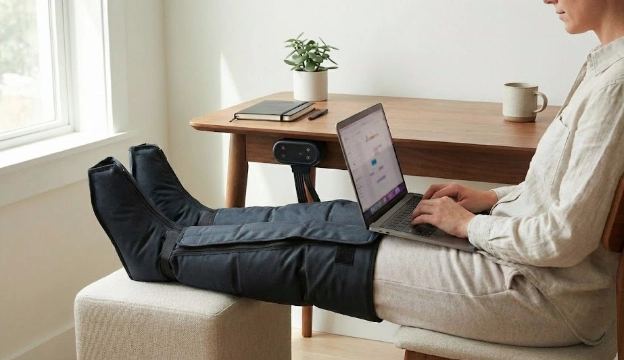
The best routine is the one that fits into your real day.
The sneaky part is adherence. These devices work best when they become effortless. If setting them up feels like a project, you will skip it. If they live next to the couch, and you pair them with something you already do, they quietly become a habit.
And if you are someone who likes proof, tracking can help without becoming obsessive. A simple ankle measurement at the same time of day, or a weekly photo in the same lighting, can show changes your brain will miss day to day.
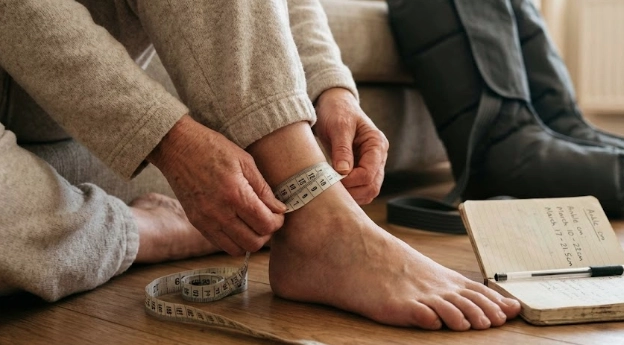
Your brain forgets fast. A tiny measurement tells the truth.
Who makes the best compression boots?
The “best” compression boot for edema is the one that fits your body, matches your comfort needs,.. and also makes you want to use it again tomorrow.
When swelling is the priority, look for true sequential compression. A device with enough chambers to create a smooth wave, has adjustable pressure, and a program that does not feel chaotic. Comfort matters more than people want to admit. Noise matters. Ease of putting them on matters, especially if swelling makes bending and zipping feel harder.
This is also where the return policy and warranty stop being boring details and start being peace of mind. If you are not sure how your body will respond, you want the option to pivot.
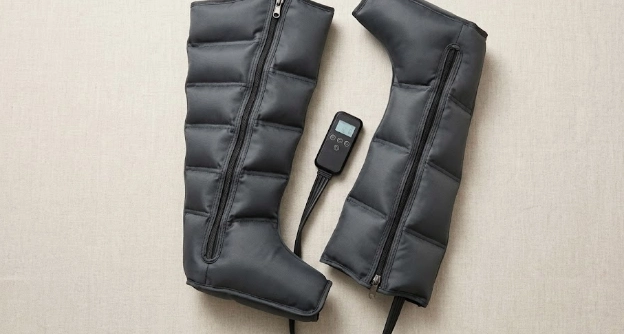
Fit and chamber design matter more than marketing hype.
Some of the most recognized options live in that higher end lane, and if you are comparing a major brand device, Hyperice compression boots is a natural place to go deeper.
A quick “fast relief” stack that usually helps
Compression boots work even better when you stop treating them like the only solution.
A short walk can also act like a natural pump. Elevating your legs can reduce pooling. Gentle ankle circles and calf contractions can move fluid without any equipment. Hydration and sodium balance can matter more than you want them to, especially if swelling spikes after salty meals or long sedentary stretches. None of this is glamorous, but it is often the difference between temporary relief and steady improvement.
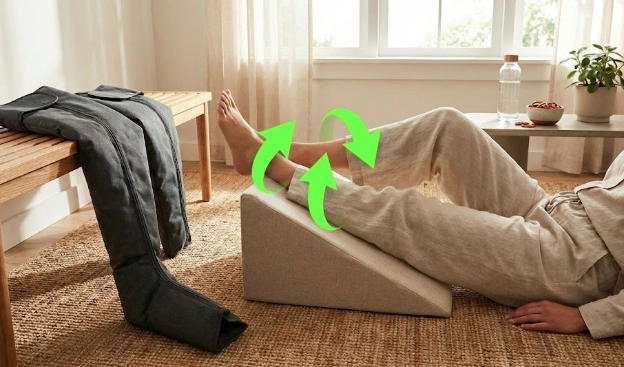
Sometimes the simplest stack works the fastest.
Conclusion on Compression Boots for Edema
Compression boots can be a real relief tool for edema, especially when your legs feel heavy, tight, and full by the end of the day. The win is not intensity. The win is choosing settings that feel good, using them consistently, and remembering that swelling is a symptom, not a flaw.
If your swelling is new, unexplained, or throwing red flags, the smartest move is to get medical clarity before you squeeze. If you already know your situation and your care team is on board, start low, build slowly, and make the routine easy enough that you actually do it.
Frequently Asked Questions
Are compression boots good for edema?
They can reduce swelling and that heavy, stretched feeling by helping move fluid out of the lower legs. They are most useful as symptom support, not a cure for the underlying cause.
When should you not use compression boots?
Avoid them unless cleared if you might have a blood clot, severe arterial disease, severe heart failure, or open wounds and infections on the limb. Stop if you feel numbness, sharp pain, or color changes.
What compression is best for edema?
Low to medium pressure is a smart place to start for mild swelling. Higher pressures are sometimes used for chronic edema and lymphedema, but that is where individualized guidance matters.
How long to wear lymphedema boots?
Many routines land around 30 to 60 minutes per session, sometimes once or twice daily depending on severity. A gradual ramp up usually feels better than jumping into long high-pressure sessions.
How many times a week should you do compression boots?
Mild swelling often responds to a few sessions per week, especially on trigger days. Chronic swelling often does better with more frequent use, sometimes daily, as long as it stays comfortable and safe.
Can compression boots make swelling worse?
Yes, if the pressure is too high, the fit is wrong, or the cause of swelling is something that should not be compressed, like clot risk, infection, or severe circulation problems. If swelling worsens after sessions, back off and reassess.
What should you do if one leg is suddenly more swollen than the other?
Treat it as a red flag, especially with warmth, redness, or pain. It is worth prompt medical evaluation to rule out serious causes.
Keep exploring
Infrared sauna dangers
Infrared sounds gentle… until you realize the “heat side effects” are not the same for everyone. If you have ever stepped out feeling wiped out instead of refreshed, this one will make you rethink the few mistakes that quietly cause most of the problems.
Do massage guns help with soreness
That deep thumping relief can feel amazing in the moment, but the real question is whether it actually changes soreness or just distracts you from it. There is a sweet spot where it helps a lot… and a line where it starts making recovery worse.
Does PEMF therapy really work
PEMF is one of those tools people swear by, while others call it expensive vibes. If you have been tempted but skeptical, this breaks down what is worth paying attention to, what is marketing fog, and how to tell if it is doing anything at all.
This article is for informational purposes only and is not intended to provide medical advice. Always consult your qualified healthcare professional before beginning any new health, wellness or recovery regimen.
-
Are compression boots good for edema?
-
When should you not use compression boots?
-
What compression is best for edema?
-
How long to wear lymphedema boots?
-
How many times a week should you do compression boots?
-
Who makes the best compression boots?
- A quick “fast relief” stack that usually helps
-
Conclusion on Compression Boots for Edema
-
Frequently Asked Questions
- Are compression boots good for edema?
- When should you not use compression boots?
- What compression is best for edema?
- How long to wear lymphedema boots?
- How many times a week should you do compression boots?
- Can compression boots make swelling worse?
- What should you do if one leg is suddenly more swollen than the other?
- Keep exploring
- Infrared sauna dangers
- Do massage guns help with soreness
- Does PEMF therapy really work