
Red Light Therapy for Black Skin. Safe or Risky?
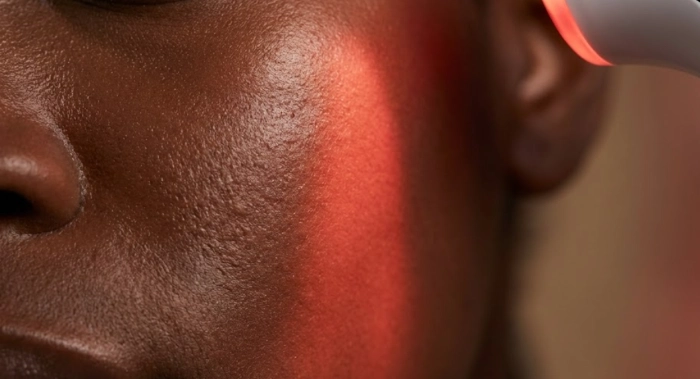
If you have ever added a red light therapy device to your cart and just before checkout, you have this voice in your head you can't seem to quiet down: “Please do not let this be the next thing that makes my skin worse!” You are exactly one of the people who search for everything related to red light therapy for black skin. The curiosity is read!. But so is the caution.. because melanin rich skin has been burned by enough “one size fits all” treatments to earn the side eye.
What makes red light therapy different is that it is not trying to sand your skin down or shock it into submission. It is more like a quiet signal to your cells: repair, calm down and rebuild. When you use it the right way, it can be one of the safest tools on the menu for tone, texture, and post breakout scars.
Is Red Light Therapy Safe for Dark Skin?
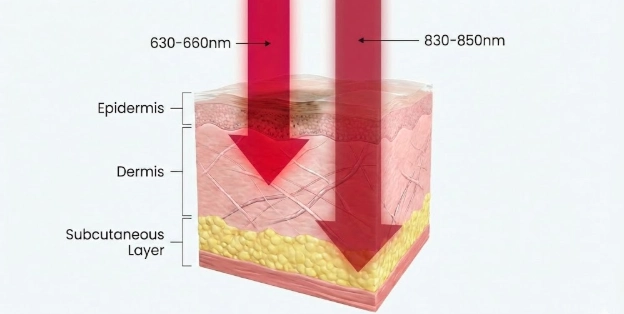
"Red light tends to stay more surface level, near infrared reaches deeper".
Yes, red light therapy is safe for dark skin, with one important caveat: The dose matters more when your skin is rich in melanin.
Red light therapy uses non ionizing wavelengths, typically in the 630 to 660 nm range for red light and 830 to 850 nm for near infrared. That is a very different category than ultraviolet light. UV light is the one that damages DNA. Red light is not playing that game at all.
Here is where the nuance lies for melanin. Melanin is a “chromophore”, meaning it absorbs light energy. Darker skin tends to absorb more of the visible red spectrum than lighter skin. That extra absorbed energy can then turn into heat. Not “scorching” heat in most red light therapy devices you will use at home, but it is enough that you definitely want to be aware and smart about how close you are to the device, the intensity level, and how long your sessions are.
Here is the practical translation: You do not need to fear red light, but you also do not need to crank it all the way up like you are trying to microwave your skin.
A simple start low protocol usually wins:
Start with 10 minutes, twice per week.
Keep a little distance from the device, often around 6 to 12 inches depending on the panel or mask.
If your skin stays calm for a full week or two, move up to 10 to 20 minutes, three to five times per week.
If you want a clean, step by step setup for the face that avoids the common mistakes, the same baseline routine in How to use Red Light Therapy on your Face fits perfectly here. This is because clean skin, consistent distance, and consistent timing are where results come from.
Can you use Red Light Therapy on Black skin?
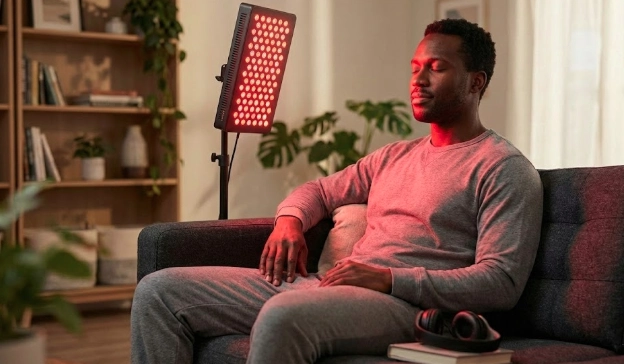
"This should feel effortless, like part of your wind down".
Absolutely. And the reason so many people are drawn to it is because it targets the things that quietly cause the most frustration: inflammation, slow healing, and the hyperpigmentation scars left behind once the breakout is gone.
If your skin tends to “remember” every pimple, every ingrown hair,... every little scratch, then you already know how annoying post inflammatory hyperpigmentation can be. The breakout usually calms down and then you are left with a shadow that can sometimes linger for weeks (or months). Red light therapy is not an instant eraser, but it can support the healing environment that eventually reduces the odds of a fresh scar getting darker. If you have existing marks it will help them fade away over time.
It also hits an underrated outcome many people describe as: “Glow!”. Not a glittery glam glow. Not oily sheen like glow. More like your skin looks rested, even if your schedule says otherwise.
And if we are being fully honest, there is also a real emotional component here. A lot of the skepticism surrounding Red Light for black skin is not “I hate new tech.” It is “I have seen trendy treatments leave melanated skin scarred, blotchy… or worse.” That level of caution makes total sense. Red light therapy usually feels safer because it is not aggressively and directly targeting your melanin the way many lasers do. It is focused on cellular energy and inflammation control first. That is a very different lane.
Does red light therapy darken skin or cause hyperpigmentation?
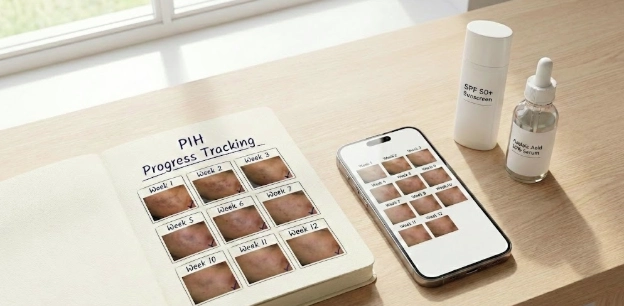
Weekly photos make slow fading way easier to notice.
True hyperpigmentation from therapeutic red light is rare. What can happen, though, is something that looks like darkening at first, and it can mess with your confidence if you are not expecting it.
Some people notice a temporary “smeared” or slightly deeper skin tone early on. Its almost like an extremely light tan (Especially if near infrared is included). It usually shows up within the first few sessions. The good news is that when this happens, it often resolves itself very quickly as you adjust to the chosen protocol.
In real life, this tends to come down to two things:
Too much energy too soon. This can stress inflamed skin.
Too much heat, which can trigger pigment pathways in skin that is already reactive or very sensitive.
If you notice that temporary darkening, try this before you panic:
Switch to red light only (no infrared) for a couple of weeks. Stay in the 630 to 660 nm range.
Increase your distance from the device so your skin does not feel warm during the session.
Reduce frequency for a week, then build back up slowly.
Overdoing it is rarely the flex people think it is. In fact, if you are tempted to stack long sessions morning and night, it is worth reading Can you do Red Light Therapy Twice a Day, because more is not always better and sometimes it is just more.
Does red light therapy help dark spots (PIH) and what the studies say?
Yes, for post-inflammatory hyperpigmentation specifically, red light therapy is one of the most promising low intensity options.
PIH is not just “extra pigment.” It is pigment that is there because inflammation told your melanocytes to go into overdrive. So the most effective long term approach usually involves calming inflammation while still supporting steady skin turnover.
This is where the science gets genuinely interesting. Without turning this article into a textbook, one of the clearest explanations of why red light can help pigment pathways is in the study on Photobiomodulation for Skin Pigmentation Disorders: A Dual Role of Visible Red and Near-Infrared Photons. The takeaway is that red light around 660 nm has been shown to decrease melanin drivers like ‘MITF’ and ‘tyrosinase’ in skin models. This is exactly what you want if your goal is “stop feeding the dark spot.”
Melasma is a different beast. It can be more hormonal, sometimes triggered by the sun, and it is also more heat sensitive. The review Photobiomodulation for Melasma Treatment: Integrative Review and Mechanistic Insights is helpful for understanding why both red and near infrared have been studied for melasma, and also why dosing and device quality matter if melasma is part of your story.
Now, expectations. This is not a two week miracle.
In weeks 1 to 2, you might notice glow and calmer skin.
In weeks 3 to 4, breakouts often feel less frequent and some scars start to fade.
In weeks 8 to 12, that is where many people notice the “my tone is actually changing” moment. This is especially true if the spots are tied to recent inflammation.
If you want red light therapy to show up for you, you also have to show up for the basics. Daily SPF is non-negotiable if you are trying to fade pigment. And pairing red light with very gentle, consistent skincare (like niacinamide, mandelic or azelaic acid) can be a smart combination if your skin tolerates it. Retinoids can be great too, but usually not the best for very sensitive skin.
What LED light is best for Black skin?
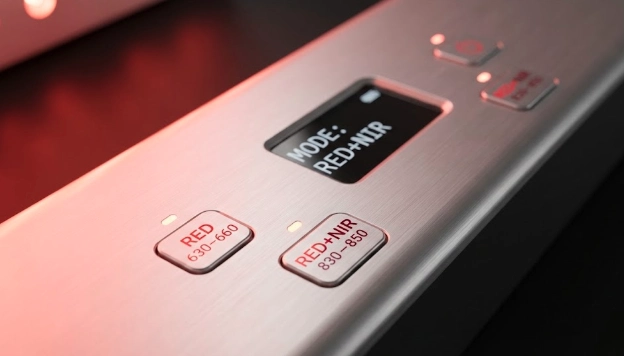
Red only days are better when you’re focused on tone.
If hyperpigmentation is your main concern, Red Light in the 630 to 660 nm range is usually the safest and most consistent starting point.
Near infrared, around 830 to 850 nm, can be incredible for recovery, deeper tissue support.. and inflammation, but the pigment story is a mixed bag for some people. That is why you will see a common pattern: start with red only, then add near infrared later if your skin stays calm and you are chasing broader benefits.
The one color to be cautious with is blue. Blue light can be useful for acne because it targets acne bacteria, but it can also stimulate pigmentation pathways in melanin rich skin (at certain doses). If you want the deeper “why,” the study on The Emerging Role of Visible Light in Melanocyte Biology and Skin Pigmentation lays out how different wavelengths interact with melanocytes, and why yellow and red tend to look more pigment friendly than blue (when hyperpigmentation is the concern).
Device quality matters more than people want to admit. Some panels are basically bright décor.
A quality device should clearly state:
The wavelengths it uses, not vague “red spectrum” language.
Reasonable power output that is meant for photobiomodulation, not mood lighting.
A track record of safety testing and consistent manufacturing.
If you are choosing between formats, masks are convenient and panels are versatile. A mask can make consistency easier (which is half the battle). If you have been eyeing wearable options, the details inside our Therabody Theraface mask Review are useful because fit, comfort, and real output matter…Especially when you are building a routine you will actually keep.
And if you are thinking bigger than just face and dark spots, there is a reason red light shows up in hair and scalp conversations too. The same cellular support themes apply as well. Red light therapy benefits for hair goes deeper on what that looks like in practice.
Is Radiofrequency safe for dark skin? (Red light vs RF)
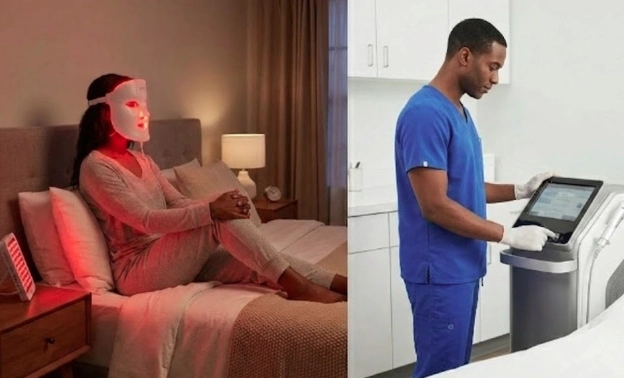
One is low heat and home friendly, the other is heat based and best supervised.
Radiofrequency can be safe for dark skin, but it is not the same category of “easy home use” as red light therapy.
Red light therapy works through photobiomodulation, meaning light energy supports cellular processes with minimal heat. Radiofrequency is a heat based method. It uses energy to warm tissue and stimulate collagen remodeling. Heat is not automatically bad, but heat is more likely to trigger post-inflammatory hyperpigmentation if the chosen settings are too aggressive or the technique is sloppy.
If your main goal is reduced pigmentation and better skin tone, red light is usually the calmer choice. If your main goal is laxity and skin tightening, radiofrequency may have an edge here.., but it should be done with the right provider and the right tools for melanin rich skin.
If you are considering RF, a few things matter a lot:
The provider should have real experience treating darker skin tones.
Energy settings often need to be conservative.
In RF microneedling, insulated tips can reduce the risk of surface overheating, which can lower the odds of pigment issues afterward.
This is also where expectations can get twisted. People sometimes chase “tightening” when what they really want is texture improvement. Red light can help texture and collagen over time, and if that is your goal, Red Light Therapy for Loose Skin ties in well here (because collagen change is a slow build, not a single session event).
Conclusion: Red Light Therapy for Black Skin
Red light therapy can be areal, science backed tool for Black skin. Especially if your goals are calming inflammation, improving tone, and having fewer stubborn post breakout marks and scars.
The winning formula is not intensity. It is consistency, quality, and patience.
Start with a red light in the 630 to 660 nm range. Keep your sessions “comfortable” and never “hot”. Track your progress with weekly photos in the same lighting, because your brain will lie to you day to day. And keep the basics tight, especially sunscreen. That is because pigment does not fade in a chaotic environment (extreme UVA/UVA from sun).
If you treat this like a steady training regimen instead of a quick fix, you will give your skin the best chance to respond.
Frequently Asked Questions
Can you use red light therapy on Black skin every day?
Many people do best with three to five sessions per week. Daily sessions are not always better, and for some skin types it can feel like too much stimulation, especially if sessions are long or the device is intense.
Does red light therapy work on darker skin if melanin absorbs more light?
Yes. Melanin can absorb more visible light, which is why starting with shorter sessions and a bit more distance is smart. Once your dose is dialed in, results can still be strong.
What wavelength is best if my main concern is hyperpigmentation?
Red light around 630 to 660 nm is usually the best place to start for dark spots and PIH. If you want to add near infrared later, do it slowly and monitor how your skin responds.
Can red light therapy make melasma worse?
It usually does not, but melasma can be sensitive to heat and triggers. If melasma is your main concern, red only protocols and careful dosing tend to be the safest approach, and it may work best as part of a broader plan.
How long does it take to see results for PIH?
Glow and calmer skin can show up in two to four weeks. More noticeable fading of PIH often takes eight to twelve weeks of consistent use.
Should I avoid blue light if I have dark skin?
If you are prone to hyperpigmentation, be cautious with blue light, especially at high exposure. Red light tends to be the safer choice for tone and pigment concerns.
What are the most common side effects for darker skin tones?
The most common issues are mild dryness or irritation from overuse, and occasionally a temporary darkened look early on, often tied to near infrared or too much intensity. Adjusting time, distance, and wavelength usually fixes it.
Keep exploring:
A solid comparison when you are deciding what tool deserves space in your routine.
If you want to separate real signal from noise and dig into what is actually measurable.
If heat based recovery has been calling your name, is a helpful next read.
This article is for informational purposes only and is not intended to provide medical advice. Always consult your qualified healthcare professional before beginning any new health, wellness or recovery regimen.